This week, we’ve got some really exciting bits of news from all corners of our industry:
Ural’s punting out a “Ural Neo 500,” estimated to be their most affordable sidecar yet – and it’s coming to America!
Kawasaki’s facing a recall affecting the crankcase bolts on over 17,000 motorcycles, with an estimated 1% affected.
Norton is giving heavy-hitter vibes with six projects lined up for future debuts – four of which are slotted for 2026.
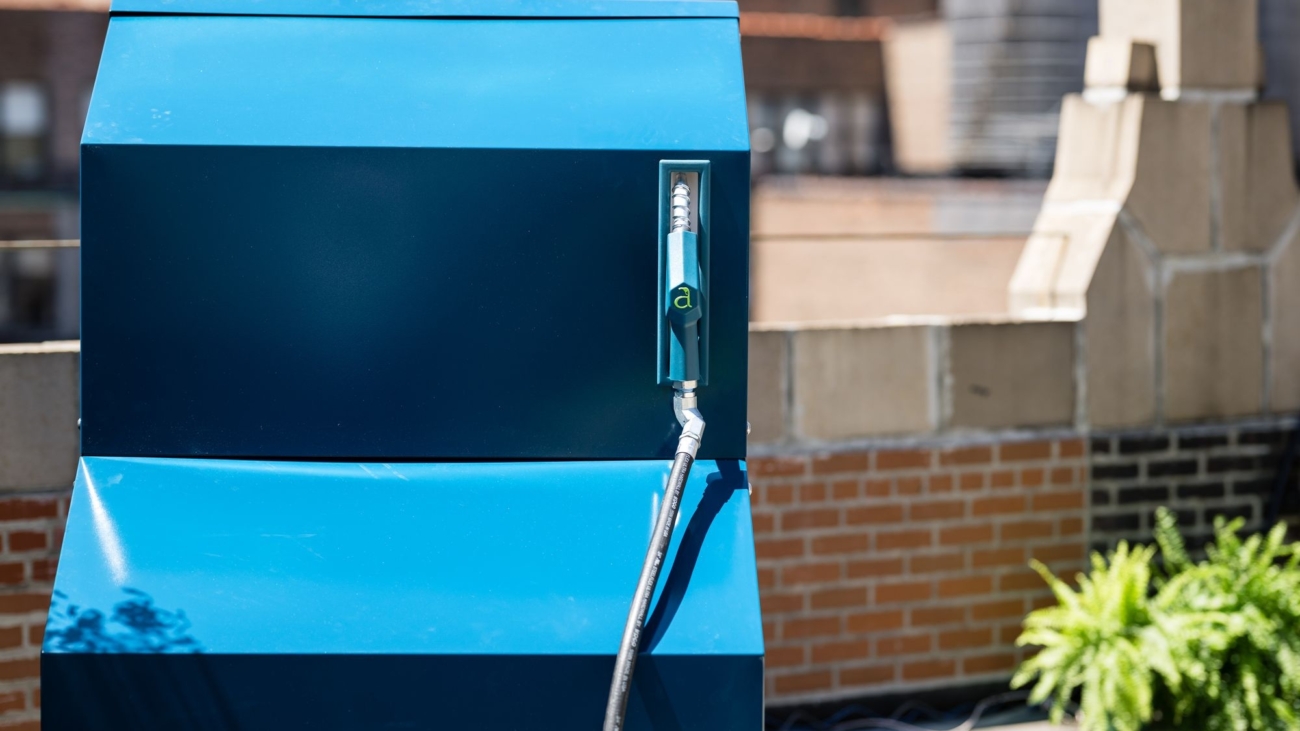
Aircela, a New York-based startup company, is working toward the production of a fuel generator that can make chemically identical synthetic fuel out of our air.
Let’s start with Ural’s new number, as we haven’t chatted about Ural in a while!
Ural’s New Sidecar is Coming to America!
A view of a Ural sidecar. Media sourced from Ural.
Neo 500 to be Ural’s Most Affordable Sidecar Yet
The last time that we covered Ural, the brand was moving from Russia to Kazakhstan due to the Russo-Ukraine war. Ural’s residual evolution has since carried a refreshing of their beloved, horizontally-opposed, 745cc air-cooled flat-twin heart (new camshaft, roller tappet and rocker arm mechanism with better alloying, casting, and tighter component tolerances) – and now, we can enjoy the brand’s continued up-and-ups here across the pond!
According to CycleWorld, America is getting a more budget-friendly sidecar. Named the Neo 500, this sidecar continues to boast the brand’s storied history, which dates back as far as WW2.
We’re told that Ural’s Neo 500 celebrated a lovely debut on US soil in Ural’s Washington headquarters – a fitting thing, considering Ural has been US-based since 2002, with America currently being the company’s largest market.
But back to the Neo 500.
While production of Ural’s boxer-twin bikes is currently underway in Kazakhstan, this new Neo 500 will be manufactured in China by Yingang – an efficient choice for when companies don’t have enough internal manufacturing facilities to build an all-new, cost-effective product.
The Neo 500 doesn’t yet seem to be at the production-prototype stage, as CycleWorld tells us that the Ural 500 coming to America has yet to lock in on official specs (height, weight, componentry, etc). Since we’re getting a bike and and sidecar with Ural’s offerings, we know that the Neo500 will be less than Ural’s next model in line, currently going for $19,999 USD. Ben Purvis also estimates that the unit will be similar to the SUV500 II it’s based on, which carries a Zongshen-designed 446cc parallel-twin engine.
Power (of the bike, not the sidecar) is anticipated to be around 35hp, with a substantial 5.3-gallon fuel tank driving a purpose-built chassis with a leading-link front suspension system and further specs reminiscent of Ural’s existing 750cc boxer-twins.
The core aim for the Ural Neo 500 is rider-friendliness, as Ural is well aware that many of their future customers will be new to the sidecar world as a whole. Better still, we’re told that Ural’s aiming for this sidecar to enter US markets under $15,000 USD, which will be realized sometime mid-2026.
To get all the details on Ural Neo’s new affordable sidecar, be sure to check out the full article on CycleWorld:
Ural Neo 500 Coming To US
Total Recall: 17,792 Ninja ZX-6R Motorcycles Affected
A view of a Kawasaki ZX-6R. Media sourced from Kawasaki.
“Certain Vehicles May Lose Engine Power During Operation”
We try to post things that are more exciting than recalls around here – but every once and a while, a recall comes by that’s impossible to ignore.
If you are in possession of a MY2024- 2025 ZX636J/K (Ninja ZX-6R) Kawasaki revver, pay attention: Your bike could very well be on a new list – along with 17,791 others – labelled “DO NOT DRIVE.”
According to the NHTSA’s recent recall notice (posted here for y’all to have a gander), the affected vehicles also include the MY24 NINJA ZX-6R 40th Anniversary Edition ABS, MY24-25 Ninja ZX-6R ABS/KRT Edition ABS, and the Ninja ZX-6R/KRT Edition. The recall population covers all units produced from April 2023 through April 28, 2025, totalling 17,792 units.
Apparently, the problem is a bunch of over-torqued crankcase bolts:
“Certain vehicles may lose engine power during operation due to a seizure of the No. 5 metal crankshaft bushing [leading to certain vehicles]… losing engine power and increasing the chance of a crash”
– National Highway Traffic Safety Administration (NHTSA)
For this type of issue, we’re told that riders won’t receive any warning before this potentially severe issue arises, leading to the urgency of the recall (despite only an estimated 1% of the affected motorcycles being projected to manifest the problem).
We DO know that the letter from NHTSA has already made its way to Kawasaki HQ, though as of June 11, 2025, there is no known remedy for this issue, nor has Kawasaki yet provided a schedule for recall notifications to owners.
Bottom line, MY2024-2025 ZX636J/K (Ninja ZX-6R) Kawasaki riders are recommended not to ride until a proper repair has been completed and officially communicated by Kawasaki.
For full details on this recall and to check if your bike is affected, please refer directly to the official NHTSA safety recall report:
Part 573 Safety Recall Report 25V376
Norton Preps to Launch Four-Cylinder Superbike at EICMA
A view of a Norton Motorcycle. Media sourced from Norton.
Six Products in the Pipeline, Four of Which are Slotted for 2026
It’s high time Norton refreshed the golden years on which they sit, and what better way to do this than to capitalize on the new ownership by dropping a fresh new superbike at EICMA this year?
It’s been a rollercoaster five years for Norton, but the iconic British marque has been quietly rebuilding, and new model launches are on the horizon (along with – surprise, surprise – new movement toward international expansion).
According to CycleWorld, the Managing Director of India’s third-largest motorcycle maker – and The Norton Motorcycle Co. Limited’s new parent company – has confirmed that Norton will target France, Germany, Italy, and Spain by 2026 with an expansion that will include four new models planned for a 2026 debut. , spearheaded by a revised version of the V-4 superbike.
Venu detailed the upcoming product pipeline in as many words below:
“I think I have mentioned six products before, four of which will be available for the summer of 2026 in the four European markets of the UK plus France, Germany, Italy, and Spain (also, of course, in India)… [we will start] off with the launch of the four-cylinder superbike at EICMA and then… the remaining three products at EICMA … which will be available in the market early 2026.
They’re all in advanced stages of development.”
– Sudarshan Venu, Managing Director, TVS Motors (CycleWorld)
Currently, we are aware that Norton’s V4SV superbike doesn’t meet Euro 5+ type-approval rules, meaning that the Norton team will need to do some finagling for the soon-to-be-revised V-4 superbike, given we’re assuming it’ll carry those iconic 185 ponies. We also know Norton’s daddy is keen on smaller-displacement bikes that will soon fill out the 450cc segment of our good industry – and yes, it’s highly likely that at least one of these entry-level bikes will carry the same platform that BMW will be using for their F 450 GS.
To Venu, the blending of platforms is a clear example of what’s to come:
“I think we [first] did the single cylinder, the 310 family. Then came the EV, and now is the two-cylinder family, which BMW has shown their version [of] at last year’s EICMA. And you will see Norton and TVS versions using a similar platform in the coming months.
So that is where I think the relationship is headed.”
– Sudarshan Venu, Managing Director, TVS Motors (CycleWorld)
To be fair, Norton would have a decent machine to compete against the likes of Triumph’s Speed 400 and Scrambler 400 X, so we will be curious to see where TVS goes as they continue to march toward new project deadlines.
The future is looking bright for this historic British brand!
For all the in-depth details on Norton’s expansive future plans and new model pipeline, be sure to read the full report on CycleWorld:
Norton Planning Six New Models
Light ‘er Up: New Startup Pulls Fossil-Free Fuel from the Air
A view of the fuel generator that New-York-based startup Aircela is building for our fuel-minded industry. Media sourced from Aircela.
Meet the New York-Born Aircela Fuel Generator
I mean. We all love the idea that fuel could go from being a major contender in the weekly budget to something we can just pull out of thin air, right?
Well, we think New York-based startup Aircela must have been of a similar mind when they went ahead and created a generator that could produce genuine, pump-grade petrol using only air, water, and renewable electricity.
According to a report from Visordown, the fuel generated from Aircela’s invention is true, pump-grade gas, though the catch is that it’s a chemically identical synthetic ingredient boasting a rating of around RON 95+.
For those of you who aren’t as “fuel-nerdy” as some of my mates, those ratings position Aircela’s fuel on par with what we could consider to be “premium-grade fuel” in our industry.
“Because the fuel is made at a small scale using the methanol-to-gasoline (MTG) process, the team can fine-tune the synthesis and hydrotreating parameters to dial in specific octane levels.
A mid-range fuel typically measures around 89 to 90 AKI, and premium quality fuel is around 91 to 94 AKI.”
– Simon Hancocks (Visordown)
Since Aircela’s fuel is made by snatching CO2 and generating renewable energy, it’s effectively a carbon-neutral option that could give electric grids across the country the break they needed as infrastructure struggles to keep up with our EV-minded world.
Aircela isn’t just a garage dream, either. The company boasts support from big names like Maersk Growth and Ripple co-founder Chris Larsen, with commercial units.
On to the big question: Will production be a reality anytime soon?
A view of the fuel generator that New-York-based startup Aircela is building for our fuel-minded industry. Media sourced from Aircela.
The answer is… yes! Units are expected to roll out by the fall of this year, though expanding after the initial launch is still an unknown for the company itself.
If Aircela’s claims hold true, the internal combustion engine might just have a much longer redline… and the future might still smell like fossils.
Or strawberries, or whatever this new stuff smells like.
For a full deep dive into Aircela’s groundbreaking fuel technology, be sure to check out the article on Visordown:
Fuel from Thin Air? New Tech Promises Fossil-Free Petrol for Motorcycles
*Media sourced from Ural Motorcycles, Kawasaki, Norton’s Facebook page, and Aircela*
The post Aircela Pulls Fuel Out of Thin Air, Norton Preps Four Projects for 2026 appeared first on webBikeWorld.
This week, we’ve got some really exciting bits of news from all corners of our industry:
Ural’s punting out a “Ural Neo 500,” estimated to be their most affordable sidecar yet – and it’s coming to America!
Kawasaki’s facing a recall affecting the crankcase bolts on over 17,000 motorcycles, with an estimated 1% affected.
Norton is giving heavy-hitter vibes with six projects lined up for future debuts – four of which are slotted for 2026.
Aircela, a New York-based startup company, is working toward the production of a fuel generator that can make chemically identical synthetic fuel out of our air.
Let’s start with Ural’s new number, as we haven’t chatted about Ural in a while!
Ural’s New Sidecar is Coming to America!
A view of a Ural sidecar. Media sourced from Ural.
Neo 500 to be Ural’s Most Affordable Sidecar Yet
The last time that we covered Ural, the brand was moving from Russia to Kazakhstan due to the Russo-Ukraine war. Ural’s residual evolution has since carried a refreshing of their beloved, horizontally-opposed, 745cc air-cooled flat-twin heart (new camshaft, roller tappet and rocker arm mechanism with better alloying, casting, and tighter component tolerances) – and now, we can enjoy the brand’s continued up-and-ups here across the pond!
According to CycleWorld, America is getting a more budget-friendly sidecar. Named the Neo 500, this sidecar continues to boast the brand’s storied history, which dates back as far as WW2.
We’re told that Ural’s Neo 500 celebrated a lovely debut on US soil in Ural’s Washington headquarters – a fitting thing, considering Ural has been US-based since 2002, with America currently being the company’s largest market.
But back to the Neo 500.
While production of Ural’s boxer-twin bikes is currently underway in Kazakhstan, this new Neo 500 will be manufactured in China by Yingang – an efficient choice for when companies don’t have enough internal manufacturing facilities to build an all-new, cost-effective product.
The Neo 500 doesn’t yet seem to be at the production-prototype stage, as CycleWorld tells us that the Ural 500 coming to America has yet to lock in on official specs (height, weight, componentry, etc). Since we’re getting a bike and and sidecar with Ural’s offerings, we know that the Neo500 will be less than Ural’s next model in line, currently going for $19,999 USD. Ben Purvis also estimates that the unit will be similar to the SUV500 II it’s based on, which carries a Zongshen-designed 446cc parallel-twin engine.
Power (of the bike, not the sidecar) is anticipated to be around 35hp, with a substantial 5.3-gallon fuel tank driving a purpose-built chassis with a leading-link front suspension system and further specs reminiscent of Ural’s existing 750cc boxer-twins.
The core aim for the Ural Neo 500 is rider-friendliness, as Ural is well aware that many of their future customers will be new to the sidecar world as a whole. Better still, we’re told that Ural’s aiming for this sidecar to enter US markets under $15,000 USD, which will be realized sometime mid-2026.
To get all the details on Ural Neo’s new affordable sidecar, be sure to check out the full article on CycleWorld:
Ural Neo 500 Coming To US
Total Recall: 17,792 Ninja ZX-6R Motorcycles Affected
A view of a Kawasaki ZX-6R. Media sourced from Kawasaki.
“Certain Vehicles May Lose Engine Power During Operation”
We try to post things that are more exciting than recalls around here – but every once and a while, a recall comes by that’s impossible to ignore.
If you are in possession of a MY2024- 2025 ZX636J/K (Ninja ZX-6R) Kawasaki revver, pay attention: Your bike could very well be on a new list – along with 17,791 others – labelled “DO NOT DRIVE.”
According to the NHTSA’s recent recall notice (posted here for y’all to have a gander), the affected vehicles also include the MY24 NINJA ZX-6R 40th Anniversary Edition ABS, MY24-25 Ninja ZX-6R ABS/KRT Edition ABS, and the Ninja ZX-6R/KRT Edition. The recall population covers all units produced from April 2023 through April 28, 2025, totalling 17,792 units.
Apparently, the problem is a bunch of over-torqued crankcase bolts:
“Certain vehicles may lose engine power during operation due to a seizure of the No. 5 metal crankshaft bushing [leading to certain vehicles]… losing engine power and increasing the chance of a crash”
– National Highway Traffic Safety Administration (NHTSA)
For this type of issue, we’re told that riders won’t receive any warning before this potentially severe issue arises, leading to the urgency of the recall (despite only an estimated 1% of the affected motorcycles being projected to manifest the problem).
We DO know that the letter from NHTSA has already made its way to Kawasaki HQ, though as of June 11, 2025, there is no known remedy for this issue, nor has Kawasaki yet provided a schedule for recall notifications to owners.
Bottom line, MY2024-2025 ZX636J/K (Ninja ZX-6R) Kawasaki riders are recommended not to ride until a proper repair has been completed and officially communicated by Kawasaki.
For full details on this recall and to check if your bike is affected, please refer directly to the official NHTSA safety recall report:
Part 573 Safety Recall Report 25V376
Norton Preps to Launch Four-Cylinder Superbike at EICMA
A view of a Norton Motorcycle. Media sourced from Norton.
Six Products in the Pipeline, Four of Which are Slotted for 2026
It’s high time Norton refreshed the golden years on which they sit, and what better way to do this than to capitalize on the new ownership by dropping a fresh new superbike at EICMA this year? It’s been a rollercoaster five years for Norton, but the iconic British marque has been quietly rebuilding, and new model launches are on the horizon (along with – surprise, surprise – new movement toward international expansion).
According to CycleWorld, the Managing Director of India’s third-largest motorcycle maker – and The Norton Motorcycle Co. Limited’s new parent company – has confirmed that Norton will target France, Germany, Italy, and Spain by 2026 with an expansion that will include four new models planned for a 2026 debut. , spearheaded by a revised version of the V-4 superbike.
Venu detailed the upcoming product pipeline in as many words below:
“I think I have mentioned six products before, four of which will be available for the summer of 2026 in the four European markets of the UK plus France, Germany, Italy, and Spain (also, of course, in India)… [we will start] off with the launch of the four-cylinder superbike at EICMA and then… the remaining three products at EICMA … which will be available in the market early 2026.
They’re all in advanced stages of development.”
– Sudarshan Venu, Managing Director, TVS Motors (CycleWorld)
Currently, we are aware that Norton’s V4SV superbike doesn’t meet Euro 5+ type-approval rules, meaning that the Norton team will need to do some finagling for the soon-to-be-revised V-4 superbike, given we’re assuming it’ll carry those iconic 185 ponies. We also know Norton’s daddy is keen on smaller-displacement bikes that will soon fill out the 450cc segment of our good industry – and yes, it’s highly likely that at least one of these entry-level bikes will carry the same platform that BMW will be using for their F 450 GS.
To Venu, the blending of platforms is a clear example of what’s to come:
“I think we [first] did the single cylinder, the 310 family. Then came the EV, and now is the two-cylinder family, which BMW has shown their version [of] at last year’s EICMA. And you will see Norton and TVS versions using a similar platform in the coming months.
So that is where I think the relationship is headed.”
– Sudarshan Venu, Managing Director, TVS Motors (CycleWorld)
To be fair, Norton would have a decent machine to compete against the likes of Triumph’s Speed 400 and Scrambler 400 X, so we will be curious to see where TVS goes as they continue to march toward new project deadlines.
The future is looking bright for this historic British brand!
See also
For all the in-depth details on Norton’s expansive future plans and new model pipeline, be sure to read the full report on CycleWorld:
Norton Planning Six New Models
Light ‘er Up: New Startup Pulls Fossil-Free Fuel from the Air
A view of the fuel generator that New-York-based startup Aircela is building for our fuel-minded industry. Media sourced from Aircela.
Meet the New York-Born Aircela Fuel Generator
I mean. We all love the idea that fuel could go from being a major contender in the weekly budget to something we can just pull out of thin air, right?
Well, we think New York-based startup Aircela must have been of a similar mind when they went ahead and created a generator that could produce genuine, pump-grade petrol using only air, water, and renewable electricity.
According to a report from Visordown, the fuel generated from Aircela’s invention is true, pump-grade gas, though the catch is that it’s a chemically identical synthetic ingredient boasting a rating of around RON 95+.
For those of you who aren’t as “fuel-nerdy” as some of my mates, those ratings position Aircela’s fuel on par with what we could consider to be “premium-grade fuel” in our industry.
“Because the fuel is made at a small scale using the methanol-to-gasoline (MTG) process, the team can fine-tune the synthesis and hydrotreating parameters to dial in specific octane levels.
A mid-range fuel typically measures around 89 to 90 AKI, and premium quality fuel is around 91 to 94 AKI.”
– Simon Hancocks (Visordown)
Since Aircela’s fuel is made by snatching CO2 and generating renewable energy, it’s effectively a carbon-neutral option that could give electric grids across the country the break they needed as infrastructure struggles to keep up with our EV-minded world.
Aircela isn’t just a garage dream, either. The company boasts support from big names like Maersk Growth and Ripple co-founder Chris Larsen, with commercial units.
On to the big question: Will production be a reality anytime soon?
A view of the fuel generator that New-York-based startup Aircela is building for our fuel-minded industry. Media sourced from Aircela.
The answer is… yes! Units are expected to roll out by the fall of this year, though expanding after the initial launch is still an unknown for the company itself.
If Aircela’s claims hold true, the internal combustion engine might just have a much longer redline… and the future might still smell like fossils.
Or strawberries, or whatever this new stuff smells like.
For a full deep dive into Aircela’s groundbreaking fuel technology, be sure to check out the article on Visordown:
Fuel from Thin Air? New Tech Promises Fossil-Free Petrol for Motorcycles
*Media sourced from Ural Motorcycles, Kawasaki, Norton’s Facebook page, and Aircela*