The Environmental Impact of Tires

Tires, with their significant environmental impact across production, usage, and disposal, demand our immediate attention. Understanding these factors is not just essential, but urgent, for promoting sustainable tire repair practices and contributing to a healthier planet.

Resource Consumption & Pollution

Tire manufacturing is resource-intensive, requiring approximately 7 million tons of natural rubber annually, which is sourced primarily from tropical rubber trees. This cultivation often results in deforestation, disrupting local ecosystems and biodiversity. Additionally, the production process contributes to pollution through emissions and waste generation, exacerbating the ecological footprint of tires throughout their life cycle.

Disposal Challenges

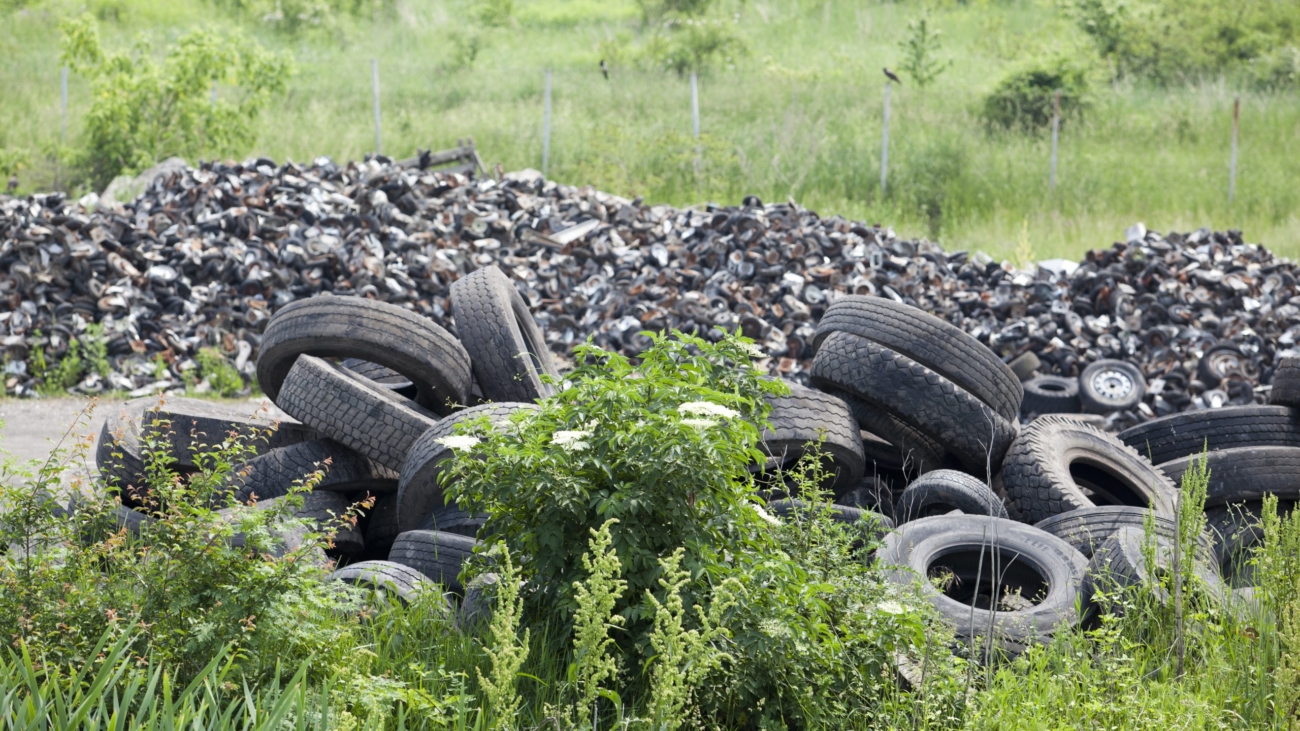
The disposal of tires presents serious environmental challenges. Each year, an estimated 290 million tires are discarded in U.S. landfills alone. Tires take up significant space, persist for decades, and are non-biodegradable, leading to landscape degradation and creating habitats for pests such as mosquitoes. Furthermore, improper disposal can result in leachate contamination and greenhouse gas emissions due to trapped methane gas.

Recycling and Sustainable Practices

Recycling tires is a crucial component in mitigating their environmental impact. Effective tire recycling processes can convert around 80% of discarded tires into reusable materials, significantly reducing landfill waste and greenhouse gas emissions compared to incineration. For instance, producing new products from recycled tires typically consumes 40% less energy than virgin materials. Moreover, tire production technology advancements, with their focus on reducing resource consumption and emissions, inspire hope for a more sustainable future. Modern practices can achieve up to a 30% reduction in resource use by utilizing recycled materials in new tire production, thereby lessening the demand for virgin resources. Embracing these technologies not only enhances the durability of tires but also promotes a more sustainable tire industry, giving us hope for a greener future.

marka_technologiczna_pracujaca_n

Maximizing Employee Wellness Program Participation

Motivating employees to participate in wellness programs can be one of the toughest challenges faced by wellness professionals. Success lies in understanding your audience, listening to their needs and offering various forms of encouragement for participation. Balancing work life with leisure has long been acknowledged as essential for productivity; now more than ever before the relationship between wellness and work cannot be denied.

Utilizing Wellness at Work

Historically, wellness was seen as an individual choice–exercising after work or making healthy food at home–but it has now become clear that company health depends on employee wellbeing. Unhealthy workers can often be absent, demotivated and struggle with work/life balance resulting in presenteeism resulting in presenteeism; thus highlighting its correlation to company success. Not to even mention rising healthcare costs. As a result of this realization has come an increase in corporate wellness programs.

Implementing an engaging wellness program that generates high participation and engagement is integral to your company’s success and a smart business strategy. In short, healthier employees tend to be more productive, have improved morale, and tend to remain with their employer longer, which makes wellness programs invaluable. Here is why wellness programs should be prioritized.

Wellness Program Benefits
1. Healthier and Happier Employees:

Wellness programs give employees the tools and knowledge to make healthier choices, such as providing grocery lists, cooking tutorials, exercise routines, health fairs and individual or team challenges.

Healthy employees make for happy employees. Studies show that active, healthy individuals tend to be 20% happier than average individuals and that exercise releases endorphins — our “happy chemicals.”

2. Improved Well-Being:

A holistic approach to wellness that encompasses mental and physical wellbeing leads to overall well-being. Programs which encourage healthy habits – such as eating healthily, staying active, and managing stress effectively – have significant positive effects on mental and emotional well-being.
Healthy employees tend to be more present at work, increasing productivity while raising self-esteem and sense of accomplishment.

3. Increases Morale:

By investing in wellness programs, companies demonstrate to employees they care about more than just the bottom line – thus improving morale and increasing talent retention.

Team Wellness Challenges Encourage Teamwork Wellness challenges encourage employees to work toward a shared health goal as part of an employee team, creating teamwork and social connections within the workplace.

Motivating Participation in Wellness Programs

Employee participation is central to any successful wellness program; how can companies effectively incentivize employees to engage?

Provide Powerful Information: Employee education should play an essential role in wellness programs. By explaining how healthy habits reduce chronic disease risks and enhance quality of life, companies can help their employees see the value in participating.
Allow Flexibility: Make wellness programs flexible by giving employees the option of engaging in wellness activities during work hours or on their own time – this provides more participation while showing leadership buy-in.
Keep the Program Fun and Engaging: Wellness programs should be enjoyable and engaging experiences for employees – not simply another task on their to-do lists. Tailor each program to your employees’ preferences and include activities beyond exercise and diet that make the program memorable and inclusive.
Engaging Employees in Program Design: Employee involvement is vital in making any wellness program meaningful and relevant; use focus groups to better understand employee needs and preferences so your program will reflect this involvement.

Attracting Wellness Program Participation

For programs to be effective, they must fulfill five key elements for successful participation:

Simplicity
Complex programs may disincentive participation. To keep it accessible for everyone, keep signup easy, instructions clear, and activities accessible for all participants.
Accessibility
Wellness programs should be easily accessible to employees via mobile apps or on-site resources, to maximize flexibility and convenience for participation from any location.
Expert Consultation
An attentive and experienced wellness coordinator is key to keeping employees engaged with a wellness program. Employees require someone they can turn to for support and guidance, making the program feel personalized and approachable.
Customization
Tailor the program to meet the individual needs of your employees. Provide various activities so they can select their favorite activity, increasing employee engagement and personal investment in the program.
Incentivization
Offer incentives like gift cards, gym memberships or public recognition to encourage employee participation. While long-term behavior change should always be the goal, short-term incentives may serve to create initial interest in participating.

Winter Off-Roading and Overlanding Adventures in North America

Off-Roading and Overlanding Expeditions

Winter transforms North America’s wilderness into a mesmerizing white expanse. For off-roading and overlanding enthusiasts, this season opens doors to unparalleled adventure—however, these trips demand preparation, adaptability, and love for tackling nature’s raw beauty. Let’s dive into what makes winter off-roading and overlanding a unique challenge and a rewarding experience.

Why Winter Off-Roading?

Winter conditions bring a new dimension to overlanding. This season tests vehicles and drivers, from snow-covered trails to frozen rivers. The unique landscapes offer serene beauty—towering pines laden with snow, glistening ice-capped mountains, and tranquil lakes frozen over. These scenes provide an unmatched backdrop for adventurers seeking solitude and the thrill of navigating unpredictable terrains.

 Essential Preparation
Winter overlanding isn’t for the faint-hearted. Preparation is crucial to ensure safety and enjoyment:

 Equip Your Vehicle:
Tires: Install snow-rated tires for better traction.
Recovery Gear: Carry essentials like winches, traction boards, and snow shovels.
Vehicle Check: Ensure your battery, engine fluids, and heating systems are in top condition​.

 Gear Up:
Pack warm layers, waterproof gear, and insulated boots.
A high-quality sleeping bag rated for sub-zero temperatures is essential for overnight stays.

 Map and Plan Routes:
Use GPS systems and offline maps to navigate remote areas where cellular connectivity might fail.
Familiarize yourself with local weather updates and emergency contact numbers.

 Safety First:
Travel in a convoy whenever possible to share resources and assist in emergencies.
Inform someone about your planned route and expected return​. 

Top Winter Off-Roading Destinations

 Here are some North American spots where winter off-roading offers unforgettable memories:

  1. Colorado’s San Juan Mountains:
    The snow-draped trails here are as challenging as they are breathtaking. Be prepared for high-altitude conditions and sudden weather changes.
  2. Michigan’s Upper Peninsula:
    Known for its dense forests and icy trails, this region offers a perfect mix of adventure and picturesque beauty.
  3. Yukon, Canada:
    This destination is for the truly adventurous. It offers extreme cold, vast wilderness, and the possibility of spotting the Aurora Borealis. 

Winter-Specific Challenges

 Driving on snow and ice requires different skills compared to dirt trails. Reduced traction, hidden obstacles, and extreme cold can hinder progress. Additionally, shorter daylight hours necessitate careful time management.

Adapting to these challenges improves your driving skills and makes the experience more fulfilling. For instance, maintaining momentum on snowy inclines and avoiding sharp braking on ice are techniques seasoned winter overlanders swear by.

Community and Conservation

Winter off-roading fosters camaraderie among adventurers, as shared experiences on trails often lead to lifelong friendships. Additionally, it’s essential to practice responsible adventuring—stick to designated trails, respect wildlife, and avoid damaging fragile ecosystems.

Winter off-roading and overlanding present the ultimate test of resilience and adaptability. With the right gear, preparation, and mindset, adventurers can uncover the pristine, untamed beauty of North America’s winter wilderness. So gear up, plan your route, and let the call of the wild guide your winter adventure.

 For more tips on winter off-roading preparation, check trusted overlanding forums or reach out to seasoned experts. Embark on the journey of a lifetime, where each frost-laden trail leads to unforgettable stories.

Sena SMART HJC 50B Bluetooth & Mesh Communication System Review

The SMART HJC 50B Bluetooth & Mesh communication system is a powerful device by Sena that seamlessly integrates with a select few HJC helmets. It supports both Bluetooth and Mesh intercom, and boasts a 13-hour battery life. Features like music sharing add value, although the device is limited to HJC helmets, which reduces flexibility. Still, for riders with a compatible helmet, it’s an excellent communicator.

Pros

  • Perfect integration with select HJC helmets

  • Voice operation enabled

  • Advanced noise control effectively eliminates background noise

  • Music sharing between SMART headset units

  • Long battery life

  • Mesh intercom connects up to 6 riders within 2 km

  • Intuitive app interface

  • Discreet, secure mounting

Cons

  • Buttons on both sides can be distracting

  • Mesh bridging with other brands must be initiated by them

  • Premium pricing, considering it’s limited to HJC helmets

  • Device settings need optimization before first use

Review Summary

  • Price: $349.99 USD

  • Compatible with select HJC helmets including carbon fiber models

  • Excellent build and seamless helmet integration

  • Very easy installation—took under 5 minutes

  • Good sound, but not as deep or rich as competing units like Cardo

  • Sound can be tinny at higher speeds

  • App simplifies setup and adjustments

  • Long battery life—13 hours continuous use

  • Buttons on both sides may distract riders

  • Limited to HJC helmets—less ideal for riders who rotate helmets

A Collaboration Between Two Giants

Sena and HJC—two of the most respected names in motorcycling—came together for this product. Sena’s communicator tech pairs impressively well with HJC’s helmet design. The result is a tightly integrated, high-quality experience.

For this review, the unit was tested with an HJC RPHA 71 Carbon helmet, where it really shined.

Tech Specs

  • Bluetooth 5.0

  • Mesh Intercom (up to 6 riders, 2km range)

  • Bluetooth Intercom (up to 4 riders)

  • Universal intercom compatibility

  • Music sharing

  • Audio multitasking

  • HD speakers

  • Advanced noise control

  • 13-hour battery life

  • FM radio

  • Voice assistant access

  • Companion app

  • Compatible with: RPHA 71, RPHA 91, RPHA 31, i71

Sena 21B vs 50B

Similarities:

  • Bluetooth 5.0+

  • FM radio

  • Voice prompts

  • App support

  • Simple setup

Differences:

  • 50B has dual control units, voice command, and Mesh

  • 21B lasts 22 hours; 50B lasts 13

  • 21B better for smaller groups; 50B ideal for larger groups or hands-free operation

Build Quality & Integration – 95%

The 50B is clearly a premium unit, with smart design choices and strong materials. Integration with HJC helmets is seamless—dedicated speaker pockets, cable routing, and microphone placement all make for a clean install with no mess.

Water resistance is acceptable, but an official IP rating (like Cardo’s IP67) would’ve been appreciated.

Sound Quality – 80%

Sound is crisp and clear for conversations, but lacks bass and richness compared to competitors. At higher speeds, audio can feel slightly tinny. Microphone performance is excellent, thanks to noise-cancellation—no wind or engine noise transmits during intercom use.

The unit benefits from in-app sound setting adjustments. Without proper configuration, multitasking features (like listening to music while in intercom mode) can underperform.

Ease of Use – 80%

After a short learning curve, operation becomes intuitive. The unit powers on/off quickly and doesn’t have a loud startup jingle. Pairing is simple, but requires using the dedicated SMART HJC app (not Sena’s generic one).

Voice commands work well but require clear speech, especially at speed. Accidental button presses on both sides of the helmet can be a distraction.

Mesh & Bluetooth Intercom

Mesh works well for seamless, group-based comms. Manufacturer data conflicts on whether it supports 6 or 24 users, but real-world testing confirms smooth operation for smaller groups.

Bluetooth intercom works as expected. Pairing with non-Sena or non-HJC devices (e.g., Cardo) is possible, though bridging between systems must be initiated on the other device.

Battery Life – 95%

The 50B lasts 13 hours per charge. Charging is convenient and doesn’t require removing the unit—just plug into the port located at the rear. Unlike some competitors, the unit doesn’t give a voice-based battery status on shutdown—you have to request it manually.

Value for Money – 80%

While not cheap, the SMART HJC 50B justifies its price with strong performance and outstanding helmet integration. The only real drawback is that it’s only compatible with a limited number of HJC helmets. Riders with multiple helmet brands might find this limiting.

Final Verdict

If you own a compatible HJC helmet and want a sleek, integrated, high-performing communicator, the SMART HJC 50B is one of the best options available. It’s not flawless—sound could be improved, and broader compatibility would help—but it’s solid, reliable, and built for real-world riding.

Motorcycle Roadside Assistance: A Guide for Everyday Riders

magine being miles away from home on your motorcycle, with a flat tire or a dead battery leaving you stranded. For riders, such situations are more than just inconvenient; they can be downright stressful and potentially unsafe. This is why having a reliable motorcycle roadside assistance service is essential for peace of mind and safety on the road.

Whether you’re a daily commuter, an avid long-distance rider, or someone who simply enjoys weekend rides, understanding the value of roadside assistance can make all the difference. Here, we’ll cover common roadside issues, explain the services offered, guide you on choosing the right plan, and highlight the benefits of staying prepared.

Common Motorcycle Roadside Assistance Needs for Riders

Motorcycles are incredible vehicles, but they’re also susceptible to unique challenges when out on the road. Several common issues can leave you stuck in an unexpected roadside emergency:

  • Flat Tires: Punctures or tire damage can bring your ride to a halt, especially if you don’t have the tools or expertise to handle a repair on the spot. Unlike cars, motorcycles do not carry spare tires, making roadside assistance essential.

  • Dead Batteries: Motorcycle batteries are smaller than car batteries and can drain more quickly, especially if you’ve accidentally left the lights on or your battery is nearing the end of its life.

  • Fuel Shortages: Running out of fuel seems like a simple problem, but it can feel daunting if you’re in an unfamiliar area or far from the nearest gas station.

  • Mechanical Failures: From engine trouble to issues with chains and belts, mechanical failures can leave you stranded without options. A quick towing service might be necessary to get your bike to the nearest repair shop.

  • Lockouts or Lost Keys: Yes, motorcycle lockouts happen too! Riders often find themselves unable to start their bike due to misplaced or damaged keys.

These scenarios highlight the crucial need for a dependable motorcycle roadside assistance plan.

Services Covered in Motorcycle Roadside Assistance

Most motorcycle roadside assistance services provide a comprehensive range of solutions tailored to the unique needs of motorcycle riders:

  • Towing Services: Motorbike towing is a key feature of any roadside assistance plan. Should your bike break down, a professional towing service can transport it safely to a garage or your preferred destination.

  • Fuel Delivery: Ran out of gas? A roadside assistance provider can deliver fuel directly to your location, so you can get moving again without stress.

  • Battery Boost or Replacement: Dead battery? Many plans include jump-start services or even emergency battery replacement to get you back on the road.

  • Flat Tire Assistance: Roadside services often include fixing a flat tire or transporting your bike to a nearby repair shop if necessary.

  • Lockout Support: If you’ve lost your keys or locked them in a storage compartment, assistance teams can help you gain access.

  • Other Emergency Assistance: Additional coverage may include services like extracting your bike from difficult terrains, emergency repairs, or providing directions to nearby facilities in case of an emergency.

How to Choose the Right Provider for Motorcycle Roadside Assistance

With many options available, it’s important to carefully evaluate providers before selecting a plan. Consider these key factors:

  • 24/7 Availability: Roadside emergencies don’t keep a schedule, so choose a plan that operates around the clock.

  • Specialized Expertise: Ensure the provider has technicians trained in motorcycle-specific mechanics and towing.

  • Coverage Area: Confirm the service covers the areas you ride in, whether locally or across multiple states.

  • Pricing and Flexibility: Compare plans to find one that fits your budget. Some offer pay-per-use while others provide annual subscriptions.

  • Response Time: Fast dispatch and service times can make a huge difference when stranded.

Why Motorcycle Roadside Assistance is Worth It

Investing in a motorcycle roadside assistance plan brings multiple benefits:

  • Cost Savings: Avoid expensive out-of-pocket costs for towing, repairs, or replacements.

  • Safety and Peace of Mind: Knowing help is a phone call away reduces stress, especially in remote locations.

  • Convenience: Skip the hassle of trying to fix complex issues on your own with professional support.

  • Extended Trip Confidence: Long-distance riders can enjoy the journey without constant worry.

  • Professional Service: Trained technicians handle your motorcycle with the care it deserves.

Frequent Questions About Motorcycle Roadside Assistance

  • What does motorcycle roadside assistance cover?
    Typically towing, fuel delivery, battery jump-starts, flat tire support, and lockout assistance.

  • How quickly can I expect help to arrive?
    Response times vary, but many providers aim for dispatch within 30 to 60 minutes.

  • Is my motorcycle eligible for roadside assistance?
    Most standard motorcycles are covered, but check with your provider for restrictions.

  • What should I do while waiting for assistance?
    Ensure your safety first—move to a safe spot if possible, turn on hazard lights, and stay visible.

  • Can roadside assistance fix flat tires?
    Some providers offer on-site repairs; others may tow your motorcycle to a shop.

  • Are there restrictions on the type of motorcycles covered?
    Coverage can vary; confirm eligibility for custom or specialized bikes.

  • How is motorcycle roadside assistance different from car roadside assistance?
    Motorcycle plans are tailored with specialized towing and repair services suited for two-wheeled vehicles.

Stay Prepared for the Road Ahead

Motorcycling is all about freedom and adventure, but unexpected breakdowns can take the joy out of any ride. A motorcycle roadside assistance plan ensures you’re protected wherever the road takes you. From towing to tire repairs, it combines convenience, safety, and cost savings.

Don’t wait until you’re stranded to take action. Invest in a reliable roadside assistance plan that provides 24/7 support and professional help whenever you need it.

Hands-On Review: Richa Infinity 3 Pro Pants

Breakdown
The Richa Infinity 3 Pro Pants feature a thermal liner, D3O CE Level 1 knee and hip armor, and Cordura construction, providing a CE AA abrasion rating. They are available in an extensive range of sizes, including long and short variants. These are a great pair of adventure touring pants. I wish Richa would boost the protection level to level 2 and add larger-format armor in larger sizes.

Build Quality

Fit & Comfort

Waterproof

Protection

Value for Money

Pros
CE AA abrasion rating
Laminated Aquashell Waterproofing
Comfortable to wear
D3O CE Level 1 Knee and Hip Armor
Thermal liner included
Large variety of sizes

Cons
Only Level 1 Armor
Type B (large) armor for larger sizes would be nice
No women’s version

4.7

Buy Now
Richa

Review Summary

The Richa Infinity 3 Pro is a comfortable pair of adventure touring pants featuring Level 1 D3O knee and hip armor. The Cordura construction provides an AA abrasion rating.
The pants feature an Aquashell waterproof laminated membrane.
The included thermal liner is appreciated on cold days.
The Fitlock vents provide good ventilation.
The Infinity 3 Pro has excellent build quality and value pricing.
Wide range of sizes.

Richa Infinity 3 Pro Pants: All-season Comfort with Thermal Liner

In early spring, I received the Infinity 3 Pro combination, one of Richa’s latest jacket and pants for me to review. I have been lucky to have Richa’s support; the Infinity 3 Pro is the fourth jacket and pant combination I have reviewed in the last six years. I looked forward to putting the Infinity 3 Pro combo through its paces.

The Infinity 3 Pro pants are a multi-season textile motorcycle adventure touring pant, priced at around $350. It features a waterproof membrane, a thermal liner,  AA abrasion rating, Fidlock ventilation system, and D3O CE Level 1 protection at the knees and hips.

The Infinity line sits in the middle of the Richa apparel line. The Infinity 3 Pro is the top model in the Infinity line.

I tested the pants on a Husqvarna Norden 901.

I received the pants in April, just as our riding season was getting underway.  During some of those early rides, I was thankful for the included thermal liner.

About Richa

Richa dates back to 1952 when company founder Charles Rigaux launched his first pair of leather motorcycle gloves. His goal was quality, which remained a priority throughout later RICHA collections.

Richa grew, creating leather motorcycle clothing, including motorcycle jackets, pants, and accessories with high-tech coatings and advanced D3O® protection. Since 2011, Richa gloves have been GORE-TEX® certified.

Today, Richa is a trusted motorcycle apparel brand sold in over 40 countries worldwide. It offers a full range of products for any budget, staying true to its motto: ‘Feel safe, feel good.’

Richa has a new distributor in the USA.  I would like to thank Michael at RICHA USA and the team at Richa, based in Belgium, for allowing me to review the Richa Infinity 3 Pro Pants.

Richa Infinity 3 Pro Pant Features

The Richa Infinity 3 Pro Pants feature several protective elements that shield against inclement weather and abrasion. The most notable are listed below.

Features

CE AA rated abrasion resistant 100% polyester outer shell with a soft, comfortable mesh lining.
Fully waterproof with a laminated Aquashell membrane
Reinforcements at the inner thigh seat contact area
Fidlock closure system on each thigh vent
Detachable thermal liner
D3O® Level 1 knee and hip protectors included
Reflective elements

For a complete list of features, check out the Richa Infinity 3 Pro Pants on the company’s website.

Richa Infinity 3 Pro Pant Construction
Outer Shell

Cordura fabric in combination with reinforced material in high-impact areas. This construction enables the creation of an AA-rated, abrasion-resistant pair of pants. Stretch panels above the knee, at the back of the knee, and in the groin area provide added comfort.

SONY DSC

Outer Shell: 100% Polyester
Lining: 100% Polyester
Membrane: 100% Polyester

Interior

Nylon mesh lines the interior of these pants throughout for increased airflow and comfort.

Waistband

The waistband features a velcro adjustment on both sides. The closure is zippered, covered by a flap held in place by a snap and two metal hooks (I assume the second hook is for after lunch, at least that’s what I used it for). Behind the zipper is an additional layer of backing material. All this adds to the protection from wind and rain.

SONY DSC

Pockets

There are two front waterproof zippered slash pockets. They are relatively deep, but some riders will notice the lack of cargo pockets.

SONY DSC

Hi-Viz

When it comes to riding pants, any reflective elements are appreciated.

There is reflective branding at the back of the waist and along the flap covering the zipper on the lower leg. The reflective strip at the waist is covered when wearing the matching jacket.

There are also reflective bands above each knee and on the outer thighs. The bands are silver in daylight but appear very reflective from side angles in the dark.

The reflective elements on the Infinity 3 Pro are among the best of any I have reviewed. Well done!

Branding

The Richa name appears in the reflective strips on the lower leg and the waist. A subtle black ‘R’ logo from Richa is on the back of the waist.

Zippers

The main fly zipper is weather-sealed and has an additional rain/wind flap. The front pockets have sealed zippers. Two-way zippers with mesh backing are at the bottom of each leg. Two zippers (either short or 360 degrees) connect the Infinity 3 Pro Pants to a compatible jacket. The vent panels have sealed zippers on either side.

All the zippers operated smoothly. I initially found it awkward to connect the short zipper to the jacket. The proximity to the 360 zipper (which I seldom use) took a few tries to get started.

Colorways

The Richa Infinity 3 Pro Pants are available in black only.

Thermal Liner

SONY DSC

The Richa Infinity 3 Pro pants include a thermal liner for cold-weather riding. The liner attaches at the top with a single zipper around the waist and fastens at the bottom of the legs with dome snaps and loops.

Richa Infinity 3 Pro Pant Overall Build Quality
Sizing

The Richa Infinity 3 Pro pants are available in regular, long, and short sizes.

Men’s Short  M, L, XL, 2XL, 3XL, 4XL
Men’s Regular S, M, L, XL, 2XL, 3XL, 4XL, 5XL, 6XL
Men’s Long M, L, XL, 2XL

Use the Richa sizing chart when placing your order. For example, I wear an XL for most pants in North America. At the time of the order, I was 6’3′′ tall with 43” hips and 34” inseam. The Richa chart put me at XL Tall.  I moved up to 2XL Tall to ensure I had room for the thermal liner when required.  I’m glad I did, as the addition of hip armor and thermal liner would have made the XL too small. The tall sizes are an excellent option for individuals who are taller.

Comfort

I found the pants to be very comfortable, both with and without the thermal liner.

Thought has been given to comfort in several ways:

Included thermal liner
Adjustments (see below)
Stretch panels at the knees and groin to reduce bulk and add comfort

Adjustability

The Richa Infinity 3 Pro Pants allowed for fitment in several ways:

Adjustable velcro straps at the waist
Adjustable velcro at the hem and calves
Three-position knee armor

These straps and adjustments allow you to fine-tune the fit for comfort. In addition, the hem adjustment opens wide enough to slide over motorcycle boots with velcro to tighten around the ankles.

Richa Infinity 3 Pro Pant Functionality
Waterproofing

The Richa Infinity 3 Pro features an Aquashell waterproof membrane as part of its outer shell.

Aquashell provides some of the benefits of GORE-TEX technology, serving as a more affordable alternative.

I did have the opportunity to ride in the rain.  In this case, it was a steady light to moderate rainfall. After over an hour of riding, the waterproofing worked perfectly. Unlike separate waterproof liners, you must ensure that the vents are entirely closed.

The Richa Infinity 3 Pro combo worked great. I stayed completely dry. The outer shell also did an excellent job of shedding water.

Breathability

SONY DSC

The Infinity 3 Pro Pants contain thigh ventilation panels and zippered vents on the lower legs.

The large thigh panels open quickly with vertical zippers and horizontal velcro.  After opening the zipper, use the Fidlock magnetic hook to hold the vent open.

The lower leg mesh was less valuable, hidden behind a weather flap, even when open.

Overall, the ventilation of the Richa Infinity 3 Pro Pants was very good.

Protection

The Infinity 3 Pro Pants offer several layers of protection:

Abrasion-resistant construction
D3O CE Level 1 protection in the knees and hips

Protection is one area where the Infinity 3 Pro Pants lack. I have tested less expensive pants with higher CE Level 2 armor. Upgrades to Level 2 are available.

EN17092-3:2020 specifies general requirements for CE certification. The standard includes (but is not limited to) impact abrasion resistance, tear strength, seam strength, and dimensional stability. The Infinity 3 Pro pants have an AA rating. Given their solid construction, I was surprised they didn’t have an AA rating.

Classification AAA: The highest level
Classification AA: More suited to touring gear
Classification A: Deemed suitable for urban riding
Classification B is similar to A, but impact protectors are not required
Classification C covers garments such as undersuits that have impact protection for off-road riding

The armor used in these pants is:

Knee Certified (EN 1621-1:2012; KES TYPE A; Protection level: 1)

Hip Certified (EN1621-1:2012; H TYPE A; Protection Level: 1)

EN1621-1 is a certification standard for shoulders, elbows, knees, and hips.

SONY DSC

Protector styles are as follows: S = Shoulder, E = Elbow, K = Knee, KES = Knee/Elbow/Shoulder, H = Hip, CB = Center Back, and FB = Full Back. Type A has smaller dimensions, and Protection Level 1 provides less protection than Level 2.

Care Instructions

The best way to keep the pants looking good is to wipe them down with a damp cloth. If the pants become very dirty, remove the armor, then hand- or machine-wash them, and hang them to dry. If you get caught in the rain, let them drip dry.

For details, please visit Richa’s Washing Instructions.

Warranty

Richa gear comes with a 2-year warranty, covering jackets, pants, jeans, gloves, rain clothing, functional underwear, boots, and shoes.

For details, please visit Richa Warranty.

Final Thoughts on the Richa Infinity 3 Pro Pants

Maybe it’s just me, but riding pants seem to be the last item I think about when it comes to riding gear.  And it shouldn’t be. For the longest time, if I were going to forgo an essential part of riding gear, I would often substitute regular jeans for riding pants.

Throughout this riding season, I have always worn riding pants. A first for me (the season is still young). Most of the riding has been in the Infinity 3 Pro pants.

There are many reasons for wearing riding pants, the most apparent being protection. Riding a bike that generates enough heat requires wearing riding pants as a shield. Adding the pants to my routine every time I ride, I’ve found the comfort and style of the latest available riding pants to be a welcome addition.

The Infinity 3 Pro pants are easy to incorporate into my riding routine.  I no longer need to worry about taking rain pants. I know I am going to have decent abrasion and impact protection (and heat protection from the damn catalytic converter). If it’s cold, I can add the included thermal liner, and if it’s hot, the pants have good ventilation.

I have riding pants that came with a separate internal waterproof liner. This system works great if you start in the rain.  It’s when to hit rain mid-ride that the problem occurs. It is easy enough to add a liner to your jacket at the side of the road, but not so simple for the pants.  For me, this is the advantage of laminated materials.

With its Aquashell membrane, Fidlock ventilation, D3O armor, and AA abrasion rating, the Infinity 3 Pro pants are excellent for all-around riding.

One major drawback of these pants is their lack of CE Level 2 armor protection. However, upgraded armor is available at an added cost.

The Infinity 3 Pro pants are a great alternative to more expensive Gore-Tex laminated options available on the market. The Infinity 3 Pro pants are an excellent value, especially in combination with the Infinity 3 Pro jacket.

I have an annual trip coming up with a large group of friends, and there’s no doubt I’ll be wearing the Richa Infinity 3 Pro pants.

Pros

CE AA abrasion rating
Laminated Aquashell Waterproofing
Comfortable
D3O CE Level 1 Knee and Hip Armor
Thermal liner included
Large variety of sizes

Cons

Only Level 1 Armor
Type B (large) armor for larger sizes would be nice
No women’s version

Specs

Manufacturer: Richa
Price: (When Tested) Approximately $348
Made In: Pakistan
Colors: Black
Sizes: Regular S, M, L, XL, 2XL, 3XL, 4XL, 5XL, 6XL.  Short M, L, XL, 2XL, 3XL, 4XL. Tall M, L, XL, 2XL.
Review Period: April 2025 to June 2025

Important Links / Where to Buy

Richa USA
Richa

The post Hands-On Review: Richa Infinity 3 Pro Pants appeared first on webBikeWorld.

​

Review Summary

The Richa Infinity 3 Pro is a comfortable pair of adventure touring pants featuring Level 1 D3O knee and hip armor. The Cordura construction provides an AA abrasion rating.
The pants feature an Aquashell waterproof laminated membrane.
The included thermal liner is appreciated on cold days.
The Fitlock vents provide good ventilation.
The Infinity 3 Pro has excellent build quality and value pricing.
Wide range of sizes.

Richa Infinity 3 Pro Pants: All-season Comfort with Thermal Liner

In early spring, I received the Infinity 3 Pro combination, one of Richa’s latest jacket and pants for me to review. I have been lucky to have Richa’s support; the Infinity 3 Pro is the fourth jacket and pant combination I have reviewed in the last six years. I looked forward to putting the Infinity 3 Pro combo through its paces.

The Infinity 3 Pro pants are a multi-season textile motorcycle adventure touring pant, priced at around $350. It features a waterproof membrane, a thermal liner,  AA abrasion rating, Fidlock ventilation system, and D3O CE Level 1 protection at the knees and hips.

The Infinity line sits in the middle of the Richa apparel line. The Infinity 3 Pro is the top model in the Infinity line.

I tested the pants on a Husqvarna Norden 901.

I received the pants in April, just as our riding season was getting underway.  During some of those early rides, I was thankful for the included thermal liner.

About Richa

Richa dates back to 1952 when company founder Charles Rigaux launched his first pair of leather motorcycle gloves. His goal was quality, which remained a priority throughout later RICHA collections.

Richa grew, creating leather motorcycle clothing, including motorcycle jackets, pants, and accessories with high-tech coatings and advanced D3O® protection. Since 2011, Richa gloves have been GORE-TEX® certified.

Today, Richa is a trusted motorcycle apparel brand sold in over 40 countries worldwide. It offers a full range of products for any budget, staying true to its motto: ‘Feel safe, feel good.’

Richa has a new distributor in the USA.  I would like to thank Michael at RICHA USA and the team at Richa, based in Belgium, for allowing me to review the Richa Infinity 3 Pro Pants.

Richa Infinity 3 Pro Pant Features

The Richa Infinity 3 Pro Pants feature several protective elements that shield against inclement weather and abrasion. The most notable are listed below.

Features

CE AA rated abrasion resistant 100% polyester outer shell with a soft, comfortable mesh lining.
Fully waterproof with a laminated Aquashell membrane
Reinforcements at the inner thigh seat contact area
Fidlock closure system on each thigh vent
Detachable thermal liner
D3O® Level 1 knee and hip protectors included
Reflective elements

For a complete list of features, check out the Richa Infinity 3 Pro Pants on the company’s website.

Richa Infinity 3 Pro Pant Construction
Outer Shell

Cordura fabric in combination with reinforced material in high-impact areas. This construction enables the creation of an AA-rated, abrasion-resistant pair of pants. Stretch panels above the knee, at the back of the knee, and in the groin area provide added comfort.

SONY DSCOuter Shell: 100% Polyester
Lining: 100% Polyester
Membrane: 100% Polyester

Interior

Nylon mesh lines the interior of these pants throughout for increased airflow and comfort.

Waistband

The waistband features a velcro adjustment on both sides. The closure is zippered, covered by a flap held in place by a snap and two metal hooks (I assume the second hook is for after lunch, at least that’s what I used it for). Behind the zipper is an additional layer of backing material. All this adds to the protection from wind and rain.

SONY DSC

Pockets

There are two front waterproof zippered slash pockets. They are relatively deep, but some riders will notice the lack of cargo pockets.

SONY DSC

Hi-Viz

When it comes to riding pants, any reflective elements are appreciated.

There is reflective branding at the back of the waist and along the flap covering the zipper on the lower leg. The reflective strip at the waist is covered when wearing the matching jacket.

There are also reflective bands above each knee and on the outer thighs. The bands are silver in daylight but appear very reflective from side angles in the dark.

The reflective elements on the Infinity 3 Pro are among the best of any I have reviewed. Well done!

Branding

The Richa name appears in the reflective strips on the lower leg and the waist. A subtle black ‘R’ logo from Richa is on the back of the waist.

Zippers

The main fly zipper is weather-sealed and has an additional rain/wind flap. The front pockets have sealed zippers. Two-way zippers with mesh backing are at the bottom of each leg. Two zippers (either short or 360 degrees) connect the Infinity 3 Pro Pants to a compatible jacket. The vent panels have sealed zippers on either side.

All the zippers operated smoothly. I initially found it awkward to connect the short zipper to the jacket. The proximity to the 360 zipper (which I seldom use) took a few tries to get started.

Colorways

The Richa Infinity 3 Pro Pants are available in black only.

Thermal Liner

SONY DSC

The Richa Infinity 3 Pro pants include a thermal liner for cold-weather riding. The liner attaches at the top with a single zipper around the waist and fastens at the bottom of the legs with dome snaps and loops.

Richa Infinity 3 Pro Pant Overall Build Quality
Sizing

The Richa Infinity 3 Pro pants are available in regular, long, and short sizes.

Men’s Short  M, L, XL, 2XL, 3XL, 4XL
Men’s Regular S, M, L, XL, 2XL, 3XL, 4XL, 5XL, 6XL
Men’s Long M, L, XL, 2XL

Use the Richa sizing chart when placing your order. For example, I wear an XL for most pants in North America. At the time of the order, I was 6’3′′ tall with 43” hips and 34” inseam. The Richa chart put me at XL Tall.  I moved up to 2XL Tall to ensure I had room for the thermal liner when required.  I’m glad I did, as the addition of hip armor and thermal liner would have made the XL too small. The tall sizes are an excellent option for individuals who are taller.

Comfort

I found the pants to be very comfortable, both with and without the thermal liner.

Thought has been given to comfort in several ways:

Included thermal liner
Adjustments (see below)
Stretch panels at the knees and groin to reduce bulk and add comfort

Adjustability

The Richa Infinity 3 Pro Pants allowed for fitment in several ways:

Adjustable velcro straps at the waist
Adjustable velcro at the hem and calves
Three-position knee armor

These straps and adjustments allow you to fine-tune the fit for comfort. In addition, the hem adjustment opens wide enough to slide over motorcycle boots with velcro to tighten around the ankles.

Richa Infinity 3 Pro Pant Functionality
Waterproofing

The Richa Infinity 3 Pro features an Aquashell waterproof membrane as part of its outer shell.

Aquashell provides some of the benefits of GORE-TEX technology, serving as a more affordable alternative.

I did have the opportunity to ride in the rain.  In this case, it was a steady light to moderate rainfall. After over an hour of riding, the waterproofing worked perfectly. Unlike separate waterproof liners, you must ensure that the vents are entirely closed.

The Richa Infinity 3 Pro combo worked great. I stayed completely dry. The outer shell also did an excellent job of shedding water.

Breathability

SONY DSC

The Infinity 3 Pro Pants contain thigh ventilation panels and zippered vents on the lower legs.

The large thigh panels open quickly with vertical zippers and horizontal velcro.  After opening the zipper, use the Fidlock magnetic hook to hold the vent open.

The lower leg mesh was less valuable, hidden behind a weather flap, even when open.

Overall, the ventilation of the Richa Infinity 3 Pro Pants was very good.

Protection

The Infinity 3 Pro Pants offer several layers of protection:

Abrasion-resistant construction
D3O CE Level 1 protection in the knees and hips

Protection is one area where the Infinity 3 Pro Pants lack. I have tested less expensive pants with higher CE Level 2 armor. Upgrades to Level 2 are available.

EN17092-3:2020 specifies general requirements for CE certification. The standard includes (but is not limited to) impact abrasion resistance, tear strength, seam strength, and dimensional stability. The Infinity 3 Pro pants have an AA rating. Given their solid construction, I was surprised they didn’t have an AA rating.

Classification AAA: The highest level
Classification AA: More suited to touring gear
Classification A: Deemed suitable for urban riding
Classification B is similar to A, but impact protectors are not required
Classification C covers garments such as undersuits that have impact protection for off-road riding

The armor used in these pants is:

Knee Certified (EN 1621-1:2012; KES TYPE A; Protection level: 1)
Hip Certified (EN1621-1:2012; H TYPE A; Protection Level: 1)

EN1621-1 is a certification standard for shoulders, elbows, knees, and hips.

SONY DSC

Protector styles are as follows: S = Shoulder, E = Elbow, K = Knee, KES = Knee/Elbow/Shoulder, H = Hip, CB = Center Back, and FB = Full Back. Type A has smaller dimensions, and Protection Level 1 provides less protection than Level 2.

Care Instructions

The best way to keep the pants looking good is to wipe them down with a damp cloth. If the pants become very dirty, remove the armor, then hand- or machine-wash them, and hang them to dry. If you get caught in the rain, let them drip dry.

For details, please visit Richa’s Washing Instructions.

Warranty

Richa gear comes with a 2-year warranty, covering jackets, pants, jeans, gloves, rain clothing, functional underwear, boots, and shoes.

For details, please visit Richa Warranty.

Final Thoughts on the Richa Infinity 3 Pro Pants

Maybe it’s just me, but riding pants seem to be the last item I think about when it comes to riding gear.  And it shouldn’t be. For the longest time, if I were going to forgo an essential part of riding gear, I would often substitute regular jeans for riding pants.

Throughout this riding season, I have always worn riding pants. A first for me (the season is still young). Most of the riding has been in the Infinity 3 Pro pants.

There are many reasons for wearing riding pants, the most apparent being protection. Riding a bike that generates enough heat requires wearing riding pants as a shield. Adding the pants to my routine every time I ride, I’ve found the comfort and style of the latest available riding pants to be a welcome addition.

The Infinity 3 Pro pants are easy to incorporate into my riding routine.  I no longer need to worry about taking rain pants. I know I am going to have decent abrasion and impact protection (and heat protection from the damn catalytic converter). If it’s cold, I can add the included thermal liner, and if it’s hot, the pants have good ventilation.

I have riding pants that came with a separate internal waterproof liner. This system works great if you start in the rain.  It’s when to hit rain mid-ride that the problem occurs. It is easy enough to add a liner to your jacket at the side of the road, but not so simple for the pants.  For me, this is the advantage of laminated materials.

With its Aquashell membrane, Fidlock ventilation, D3O armor, and AA abrasion rating, the Infinity 3 Pro pants are excellent for all-around riding.

One major drawback of these pants is their lack of CE Level 2 armor protection. However, upgraded armor is available at an added cost.

The Infinity 3 Pro pants are a great alternative to more expensive Gore-Tex laminated options available on the market. The Infinity 3 Pro pants are an excellent value, especially in combination with the Infinity 3 Pro jacket.

I have an annual trip coming up with a large group of friends, and there’s no doubt I’ll be wearing the Richa Infinity 3

Klim K Forty 2 Stretch Denim Jeans Review

Klim aims to dominate the space between traditional streetwear and armored Kevlar-lined jeans with the K Forty 2 Stretch Denim. These straight-cut, casual-looking riding jeans are made from premium 13oz stretch denim and include nearly invisible D3O IP Ghost CE Level 1 armor in the hips and knees. They offer unmatched comfort and street style without compromising basic protection, making them a strong choice for everyday riders.

Pros

  • Discreet D3O IP Ghost armor (knees and hips) included

  • Exceptional comfort on and off the bike

  • Streetwear styling that blends in

  • Premium 13oz stretch denim and top-tier stitching

  • CE AA rating (EN 17092-3)

Cons

  • No “Tall” sizing options available

  • No Kevlar lining (relies solely on stretch denim for abrasion resistance)

  • Only two color choices

Overall Score: 4.4 / 5

Review Summary

  • Price: $279.99 USD

  • Colors: Indigo, Cobalt

  • Sizing: 30–40 waist; max 34″ inseam

  • D3O Ghost armor included (knees and hips)

  • CE AA certified (EN 17092-3)

  • No Kevlar liner

  • True-to-size fit for average-height riders

  • Comfortable enough for all-day wear

  • Ideal blend of casual style and functional riding gear

First Impressions

Out of the box, the jeans look and feel like high-end casual denim—nothing about them screams “motorcycle gear.” Even when worn, the D3O armor is virtually invisible and feather-light. The armor was already installed and blended in so well that it initially seemed missing. That subtle first impression carried through to every ride.

Street Style or Street Protection?

The K Forty 2 jeans genuinely resemble upscale casual or even dress jeans. Their straight-cut fit is modern and practical—better suited to riding than overly tapered cuts but still flattering.

They slot perfectly into a wardrobe without drawing attention. For riders who prefer gear that doesn’t look like gear, these jeans are spot-on.

Build quality is exceptional, with Klim’s signature attention to detail evident in the stitching, waistband, and flexibility of the denim. The only disappointment is the limited color palette: Cobalt (blue) and Indigo (darker blue). A black or grey option would have broadened appeal significantly.

Design & Quality: 95%

Sizing & Fit

These jeans fit true to size and are ideal for average-height riders. At 5’10”, the 32×32 size provided a perfect fit on and off the bike. However, the absence of tall sizing (no 36” inseam option) is a letdown for riders over 6’2”, who may find the jeans ride up when seated.

Size & Fit: 80%

Protection

Let’s be clear—these jeans prioritize comfort and stealth over extreme protection. The included D3O IP Ghost armor is incredibly slim, flexible, and almost weightless. It moves with you like a second skin, offering CE Level 1 impact protection without any bulk.

That said, abrasion protection is limited to the 13oz stretch denim—there’s no Kevlar or aramid layer. While the jeans are CE AA certified, they’re not built for high-speed or aggressive off-road riding. For urban and casual use, they strike a solid balance.

Protection: 75%

All-Day Comfort

Comfort is where the K Forty 2 jeans really shine. The stretch denim is breathable and moves effortlessly with your body. The D3O armor is so unobtrusive you’ll forget it’s there—until you need it.

These jeans feel like regular denim, and that’s precisely the point. Whether walking around town or riding for hours, the comfort remains consistent. They don’t overheat, at least not in mild-to-warm temperatures. For peak summer heat, mesh pants are still a better bet.

Comfort: 100%

Value for Money

At just under $280, the jeans sit in the mid-to-high range for armored denim. But considering the premium materials, CE AA certification, and included D3O Ghost armor, they offer real value. The lack of a Kevlar liner is a compromise, but one that makes sense if comfort is your top priority.

You’re paying for a riding jean that doesn’t feel like one—without sacrificing basic protection.

Value for Money: 90%

Final Verdict

The Klim K Forty 2 Stretch Denim Jeans are a perfect everyday riding companion for urban and light touring use. They’re stylish, low-profile, and supremely comfortable. While their protection levels won’t match full race-spec gear, they deliver excellent practicality for the real world.

If you want jeans you’ll actually want to wear—on and off the bike—these are an excellent choice.

HJC RPHA 71 Carbon Helmet Review

Touring helmets beware, as HJC looks to take the top spot after releasing their RPHA 71 Carbon lid. This helmet promises long-lasting, all-day comfort and performance—and after thorough testing, it exceeds expectations. It’s the most comfortable helmet I’ve worn, featuring adjustable, powerful ventilation, a dark smoke drop-down sunshield, and seamless Sena integration. However, it only meets DOT safety standards, which may be a deal-breaker compared to similar helmets.

Design & Build

  • Beautiful black carbon fiber weave shell

  • Premium, high-quality materials throughout

  • Oversized vents and aerodynamic fins combat turbulence

  • Face shield release button placement can be tricky with gloves

Size, Fit & Comfort

  • Most comfortable helmet I’ve worn

  • Fits snugly without pressure points or movement

  • Available in 6 sizes (XS-2XL) across 4 shell sizes for better protection and fit

Protection

  • EVO carbon fiber construction offers superior shock resistance

  • Only DOT certified (no Snell, ECE, or FIM)

Visibility & Ventilation

  • Extremely wide field of vision (FOV)

  • Pinlock 120 anti-fog insert included

  • Dark smoke drop-down sunshield with 3 adjustable positions

  • Powerful front-to-back adjustable airflow with large chin and top vents

Noise Control

  • Aerodynamic design minimizes wind noise but some whistling at higher speeds

  • Noise control is average compared to competitors

Features

  • SMART HJC Ready for seamless Sena Bluetooth integration

  • Emergency release cheek pads

  • High-quality multi-step visor ratchet system with 10+ positions

Value for Money

  • Priced around $635 USD

  • Offers strong value primarily for touring and leisure riders seeking comfort and advanced features

  • Not ideal for sport riders needing higher safety certifications

Pros

  • Extremely comfortable for all-day wear

  • Wide FOV with high-quality visor system and Pinlock insert

  • Adjustable, powerful ventilation

  • Sena-ready integration

  • Durable EVO carbon fiber with aerodynamic design

  • Emergency-release cheek pads

  • Multiple shell sizes for better fit

Cons

  • Only DOT certified

  • Average noise control, with whistling vent noise

  • Only one face shield included

  • Face shield release button can be hard to use with gloves

Review Summary

The HJC RPHA 71 Carbon is a mid-range touring helmet priced between $500-$750. It excels in comfort, ventilation, and rider convenience, but its lack of advanced safety certifications may limit appeal for sport riders. The helmet is well-built, stylish, and offers features like a dark smoke drop-down sunshield and seamless Sena Bluetooth integration. While noise control is average, the overall experience is immersive and comfortable for long rides.

Final Verdict

If comfort and long-day wearability are your top priorities, the RPHA 71 Carbon is an excellent choice. Its wide field of vision, adjustable ventilation, and premium materials make it stand out. Just be aware of its DOT-only certification if you require higher safety standards.

Planting Season Pressure: How to Stay Rolling When the Unexpected Hits Your Farm Tires

Planting season is the heartbeat of every growing year. It’s a time marked by early mornings, long days, and the high-stakes hustle to get crops in the ground before the window closes. But while the focus is rightly on soil conditions, seed placement, and yield potential, there’s one all-too-common disruption that can bring everything to a halt—tire failure.

When Every Hour Counts, Tire Trouble Can’t Wait

Modern farms rely heavily on their machinery: tractors, planters, sprayers, and more. One flat tire can delay a full day’s work, set back an entire field’s schedule, or worse, cause long-term equipment damage if mishandled. In peak planting season, even a short delay can snowball into missed deadlines and lost revenue.

Common Challenges During Planting Season

Farmers face a unique blend of stressors this time of year:

•  Soft, muddy fields increase the chance of tire punctures from hidden debris or rough terrain.
•  Extended machinery hours heighten wear and tear on tires.
•  Lack of immediate access to service providers in remote or rural areas makes on-the-spot repair essential.
•  Time pressure means there’s little room for unexpected breakdowns.

When you’re racing the clock during planting season, there’s no room for unreliable tools or second-guessing repairs. Every minute matters, and so does every piece of gear you count on. Our farm tire repair solutions are built tough—because they need to be. We know the field doesn’t wait, and neither should you. From sunrise to sundown, our products are designed to stand up to the dirt, the weight, the wear, and the unpredictable grind of real farm life. It’s not just about fixing a tire—it’s about keeping your operation moving when it matters most.

Keep Your Operation on Track

The key to a successful planting season isn’t just planning the perfect crop—it’s being ready for what could go wrong.